
The IEA expects global energy investment to reach USD 3.4 trillion in 2026, including about USD 2.2 trillion in clean energy investment. But its regional dashboard puts Africa at about USD 110 billion. That is a large absolute number, yet small beside the scale of need: the World Bank says nearly 600 million people in Sub-Saharan Africa still lack electricity access.
In Brief
- What changed. The 2026 evidence base is fresh: the IEA's World Energy Investment 2026 report was launched on 28 May 2026, IRENA's Renewable Capacity Statistics 2026 was released in March, and Mission 300 implementation updates arrived in March and May.
- Why it matters. Capital is not the only constraint. Africa's challenge is converting policy targets, compacts, and investor interest into bankable project pipelines with clear demand, permits, tariffs, procurement, offtake, grid integration, and risk allocation.
- What leaders should do. Treat energy plans as investment pipelines, not only policy narratives. The near-term advantage will go to teams that can show credible project folders and execution discipline.
The Signal
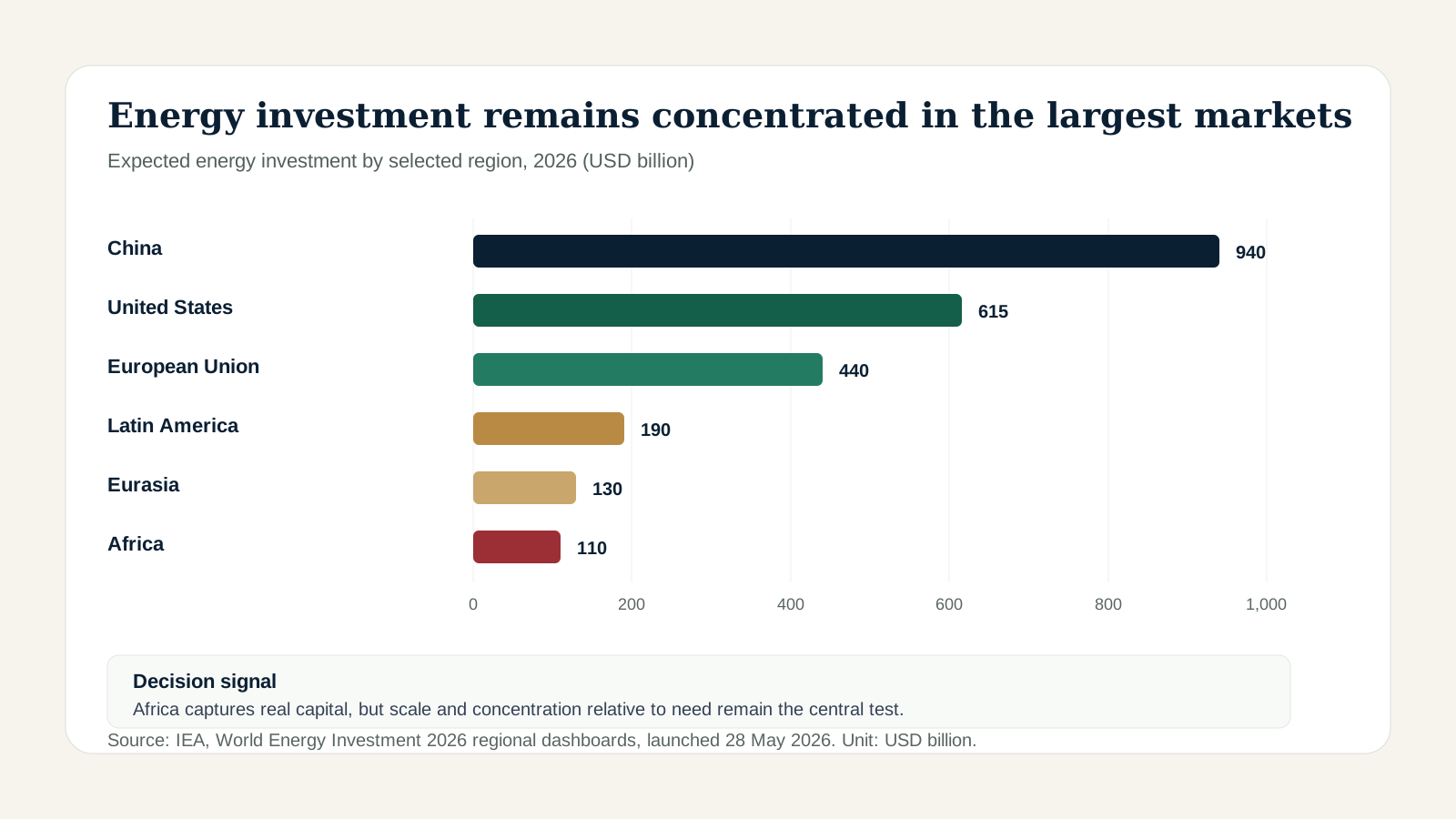
The global race is already underway. IEA's 2026 regional dashboard shows much larger investment pools in China, the United States, and the European Union than in Africa. The implication is not that Africa lacks opportunity. It is that African project sponsors and public institutions are competing for capital in a crowded global market where investors can choose between many ready alternatives.
IEA's launch material also points to a fast-moving solar supply signal: solar PV imports into Africa and Southeast Asia were reported as 120-150% higher in the first quarter of 2026 than in the first quarter of 2025. Cheaper and more available equipment helps, but modules alone do not build investable power systems. Projects still need land, interconnection, demand certainty, payment discipline, and financing structures that can survive currency and offtaker risk.
The Capacity Gap Is Still Visible
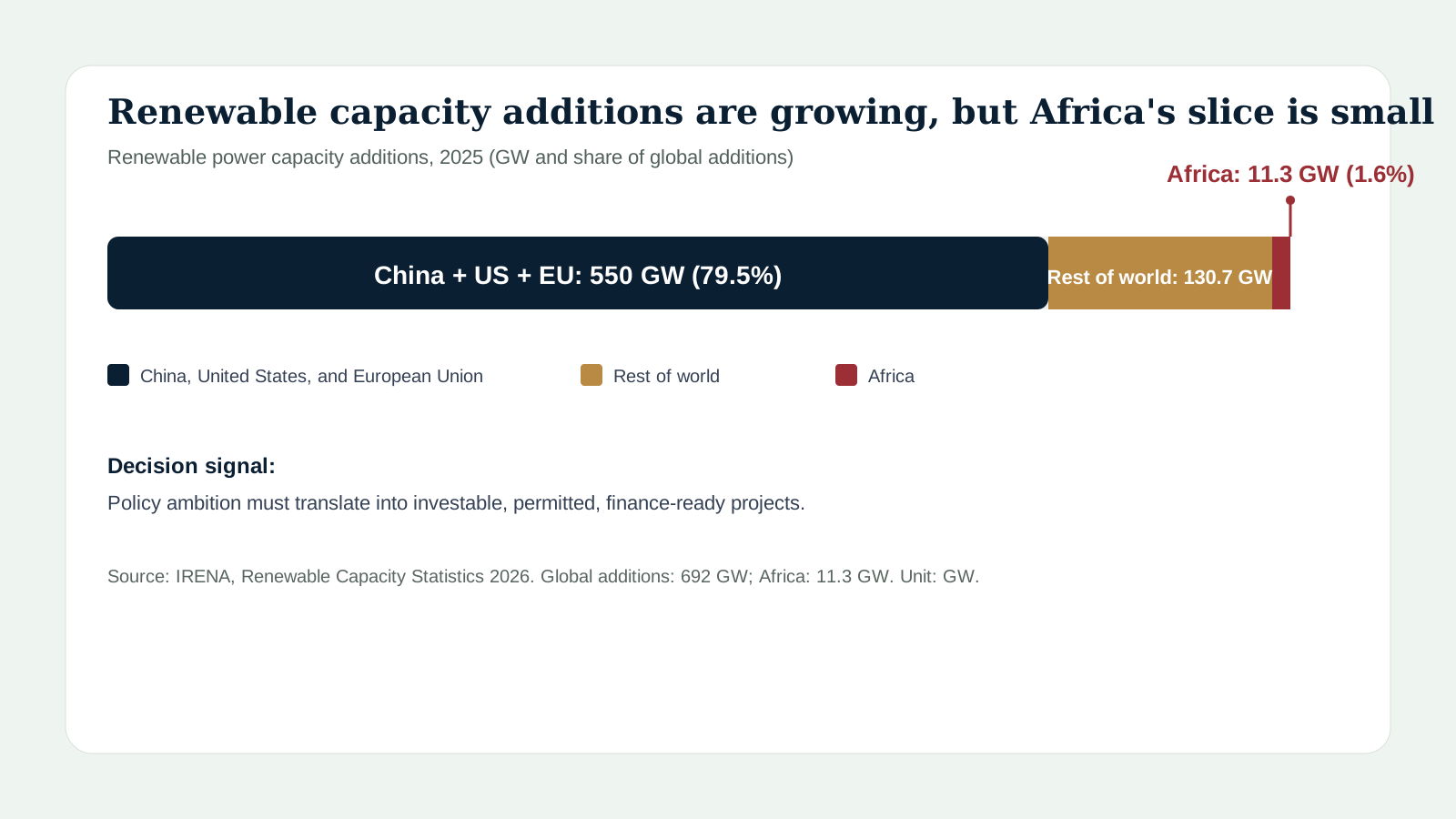
IRENA's 2026 statistics show renewable power additions reached 692 GW globally in 2025. China, the United States, and the European Union accounted for 550 GW, or 79.5% of additions. Africa added 11.3 GW, representing 1.6% of global additions, even though its renewable capacity grew 15.9% to 82 GW.
This is the core development-finance tension. Africa can show real growth and still remain underrepresented in the global buildout. That makes project quality decisive. Capital will not move just because the need is visible. It moves when a pipeline is structured enough for credit committees, public procurement boards, donors, and private investors to say yes.
Mission 300 Changes The Standard For Delivery
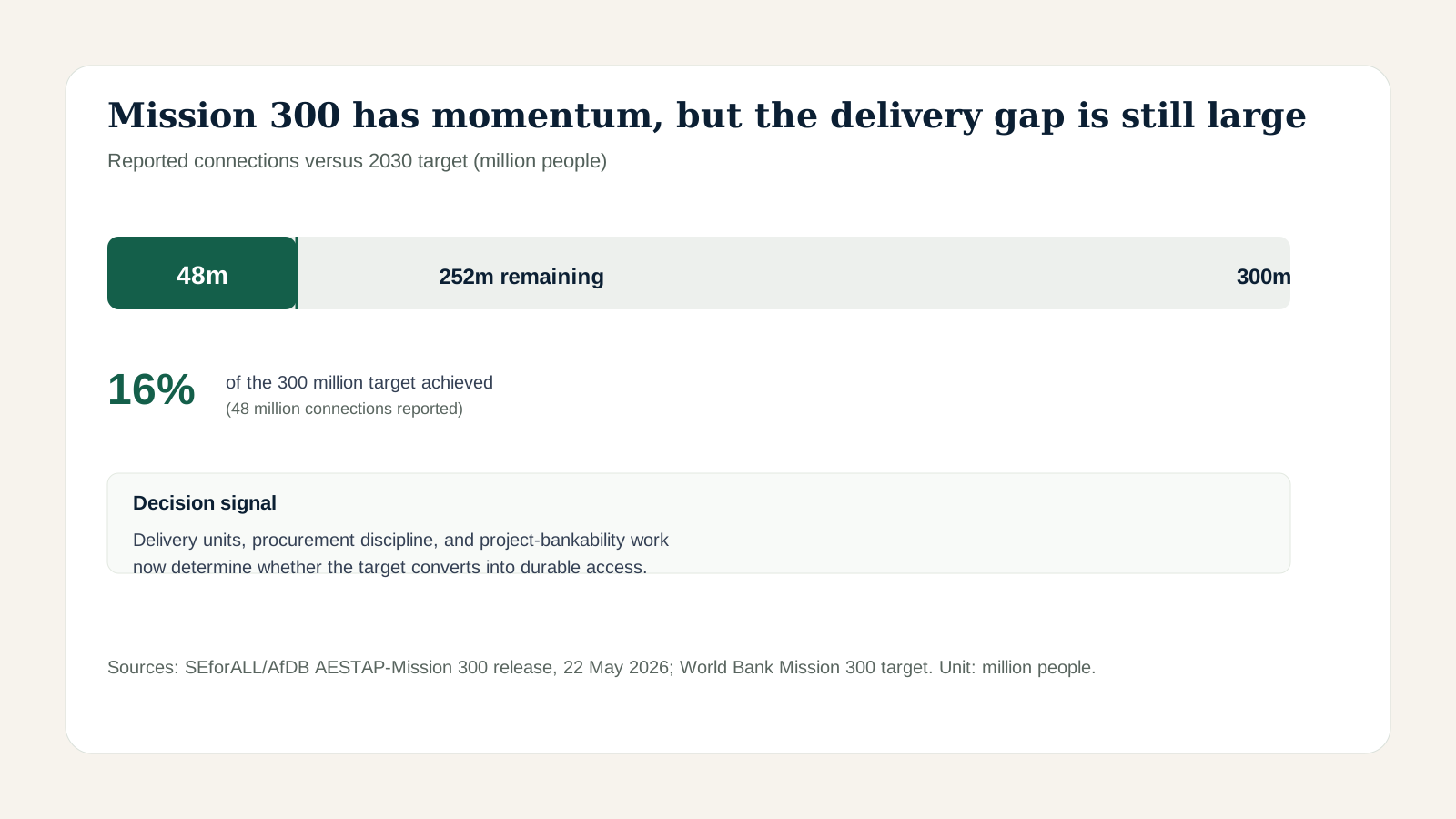
Mission 300 raises the execution bar. The World Bank and AfDB target is to connect 300 million people in Africa to electricity by 2030. The World Bank's 31 March 2026 update says Mission 300 had already helped connect 44 million people since 2024, with 30 energy compacts presented and roughly half of compact investments expected to come from the private sector. A 22 May 2026 SEforALL/AfDB update reported more than 48 million people connected and announced technical assistance to help countries implement compact delivery and monitoring units.
That matters because energy access is no longer only a planning target. It is becoming a performance-management problem. Countries and developers need delivery units that can track bottlenecks, align ministries, clear procurement issues, package projects, and show investors a path from commitment to operating assets.
Evidence Box
Global energy investment is expected to reach USD 3.4 trillion in 2026, with clean energy investment around USD 2.2 trillion.
Source: IEA World Energy Investment 2026 The capital pool is expanding, but it is highly competitive and concentrated.IEA regional data place Africa's expected 2026 energy investment at about USD 110 billion.
Source: IEA World Energy Investment 2026 regional dashboards Africa has a real investment base, but it remains small relative to global energy-capital flows and electricity-access needs.Africa added 11.3 GW of renewable capacity in 2025, or 1.6% of global additions.
Source: IRENA Renewable Capacity Statistics 2026 The region is growing, but not yet capturing a proportionate share of the global renewable buildout.Mission 300 aims to connect 300 million people in Africa to electricity by 2030; nearly 600 million people in Sub-Saharan Africa still lack electricity.
Source: World Bank Mission 300 The access gap is large enough that execution quality, not only ambition, will decide results.The World Bank says about half of compact investments are expected to come from the private sector.
Source: World Bank Mission 300 Private Sector Council press release, 31 March 2026 Private capital will need investable structures, not only public targets.What This Means For Decision-Makers
If your institution is preparing power, mini-grid, grid, battery, industrial energy, productive-use, or access-linked investments, the relevant question is not simply whether the market is attractive. It is whether the project can pass the evidence tests that serious funders and public decision-makers now expect.
That means a bankable project folder should answer basic but often neglected questions: who is the customer, what is the demand evidence, how is revenue collected, who carries currency risk, where are permits and land issues, what is the procurement route, how strong is the offtaker, how will the asset connect, and what happens if assumptions change?
Practical Actions
- Turn the energy plan into an investment pipeline. Rank projects by readiness: concept, feasibility, permits, procurement, financing, construction, and operations. Do not treat every announced project as equally bankable.
- Build evidence folders before investor outreach. Demand studies, tariff logic, payment-risk analysis, interconnection status, land documentation, E&S screening, and procurement notes should be assembled before capital conversations become serious.
- Separate grid, mini-grid, captive power, and productive-use cases. They have different revenue logic, customers, policy risks, and financing structures. One generic energy narrative will not carry all of them.
- Use delivery units to clear bottlenecks. Mission 300 compact delivery and monitoring units can matter if they track decisions, not just meetings. The useful metric is unresolved blockers per project, not only total commitments announced.
- Design for private-capital diligence. If about half of compact investments are expected from private actors, then tariffs, guarantees, local-currency exposure, offtaker credit, and dispute resolution need to be addressed early.
What To Watch Next
Track four signals through the rest of 2026: IEA updates on regional energy investment and solar supply chains; IRENA capacity data by technology and region; Mission 300 compact implementation progress; and financing terms for grid, mini-grid, storage, and distributed solar projects. The strongest opportunities will be where falling technology costs meet credible delivery systems.
MMK advisory angle. MMK Consult helps institutions, developers, and investors convert policy goals into decision-ready project evidence: feasibility studies, demand research, investor memos, market intelligence, compact implementation support, monitoring frameworks, and finance-readiness documentation. The objective is not to announce ambition. It is to make the next funding or procurement decision defensible.
Sources
- IEA - World Energy Investment 2026, launched 28 May 2026
- IEA - World Energy Investment 2026 regional dashboards
- IEA - World Energy Investment 2026 launch presentation PDF
- IRENA - Renewable Capacity Statistics 2026
- World Bank - Mission 300
- World Bank - Mission 300 Private Sector Council press release, 31 March 2026
- SEforALL and AfDB - AESTAP-Mission 300 technical assistance release, 22 May 2026